Congratulations!
You've earned 1 point
King Harald V of Norway Dies at 89, Ending a 35-Year Reign as Son Haakon Becomes King
King Harald V of Norway has died at the age of 89, bringing to an end a 35-year reign that saw him become one of his country’s most respected and enduring public figures.
The Norwegian Royal Court confirmed that Harald died peacefully at Oslo University Hospital, Rikshospitalet, at 6:35 a.m. on Friday, August 28, following a serious deterioration in his health.
His death came only a day after the Palace announced that his condition had become “very serious,” following more than a week in hospital.
Harald leaves behind his wife of almost 58 years, Queen Sonja, as well as their two children, Haakon and Princess Märtha Louise.
His son has now succeeded him as Norway’s monarch, beginning a new chapter for a royal house Harald led from January 17, 1991, until his death.
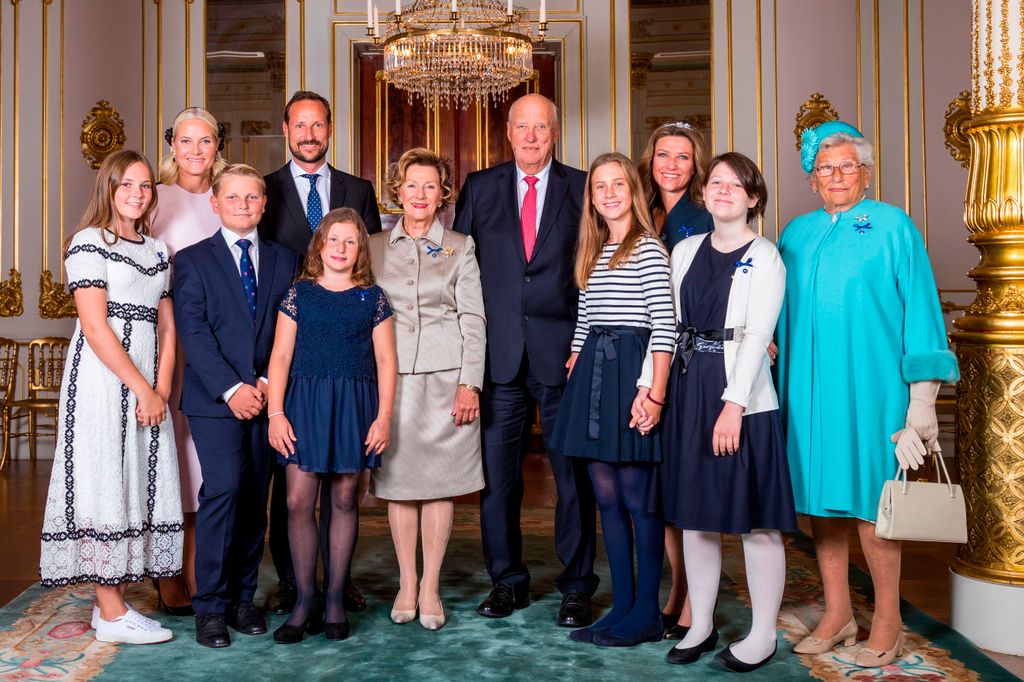
King Harald’s Final Days
Concern for Harald had intensified rapidly in the days before his death.
The King had been hospitalised while being treated for haemolytic anaemia, a condition in which red blood cells are destroyed faster than the body can replace them.
His condition subsequently worsened, and the Palace announced on August 23 that he was receiving antibiotics for a bacterial infection in his bloodstream. At that stage, officials said he had responded to treatment and was stable.
By August 27, however, the language from the Royal Court had become significantly more grave. Officials announced that Harald’s condition was “very serious,” and later said it remained unchanged. Crown Prince Haakon, who had been serving as Regent during his father’s illness, stayed close to him as members of the family gathered at the hospital.
The following morning came the announcement Norway had been preparing for.
Harald had died peacefully.
Haakon Succeeds His Father

Norway’s monarchy entered a new era immediately upon Harald’s death.
His son Haakon, 53, succeeded him as King, having increasingly assumed responsibilities during periods when his father’s health prevented him from carrying out official duties.
Haakon’s daughter, Princess Ingrid Alexandra, consequently moves into the position of heir to the Norwegian throne.
The transition follows Norway’s constitutional tradition in which the new monarch succeeds immediately rather than waiting for a coronation.
For Haakon, it is the culmination of a lifetime spent preparing for a responsibility he once struggled to embrace. In recent years, however, he had become increasingly prominent as his father experienced recurring health difficulties.
A King Who Reigned for 35 Years

Harald became King on January 17, 1991, following the death of his father, King Olav V.
Four days later, he swore his constitutional oath before the Storting, Norway’s parliament. Harald and Sonja were subsequently consecrated at Nidaros Cathedral in Trondheim on June 23, 1991.
Like his father and grandfather before him, Harald adopted the motto “Alt for Norge” — “We give our all for Norway.”
Over the following three and a half decades, he helped guide the monarchy through profound social change.
Harald’s reign was marked by an effort to make the institution more accessible and reflective of modern Norway. He was also frequently called upon to provide a sense of national unity during moments of tragedy, most notably following the terrorist attacks of July 22, 2011.
Following his death, Prime Minister Jonas Gahr Støre praised Harald’s service and his ability to unite Norwegians. Tributes also began arriving from other European royal families and international leaders.
A Childhood Shaped by War

Harald was born on February 21, 1937, at Skaugum in Asker, the only son of Crown Prince Olav and Crown Princess Märtha.
His birth carried particular constitutional significance. At the time, only men could inherit Norway’s throne, making the arrival of a male heir crucial to the succession. Harald was also the first prince born in Norway in 567 years.
His peaceful early childhood was interrupted by the German invasion of Norway in April 1940.
The Royal Family fled Oslo, and Harald eventually spent much of the Second World War in the United States with his mother and sisters, Princess Ragnhild and Princess Astrid.
The family returned to Norway following the war in 1945.
Harald later studied at the University of Oslo, completed military training and attended Balliol College, Oxford, between 1960 and 1962.
When his grandfather King Haakon VII died in September 1957, the 20-year-old Harald became Crown Prince.
The Prince Who Refused to Give Up the Woman He Loved
One of the defining personal stories of Harald’s life was his relationship with Sonja Haraldsen.
The pair knew each other for nine years before they were finally permitted to marry.
Their relationship was controversial because Sonja was a commoner, and Norway’s future king was traditionally expected to marry into royalty or nobility.
Harald, however, refused to abandon the relationship.
Eventually, after consultations with political leaders, King Olav V gave his consent. Harald and Sonja married at Oslo Cathedral on August 29, 1968.
The marriage would endure for nearly six decades.
Together they had two children: Princess Märtha Louise, born in 1971, and Haakon, born in 1973.
An Olympian King With a Lifelong Love of the Sea
Harald’s life extended well beyond his constitutional responsibilities.
He was a passionate sportsman, particularly devoted to sailing. He represented Norway at three Olympic Games — in 1964, 1968 and 1972 — and carried the Norwegian flag at the opening ceremony of the 1964 Tokyo Olympics.
His competitive sailing continued for decades. In 1987, Harald and his crew became world champions aboard Fram X, while in 2005 they won a European championship aboard Fram XV. He continued participating in regattas until announcing the end of his competitive sailing career in 2022.
Nature and environmental protection were other lifelong interests. As Crown Prince, Harald helped establish the Norwegian branch of the World Wide Fund for Nature and served as its president for 20 years.
Years of Increasing Health Problems
Harald remained committed to his duties into advanced age, but his health increasingly affected his schedule.
He underwent surgery for bladder cancer in 2003 and an operation relating to a heart valve in 2005.
In more recent years, he experienced repeated hospitalisations for infections and other health problems.
A particularly serious episode occurred during a private trip to Malaysia in 2024, when Harald became ill with an infection. He was eventually flown home and later received a permanent pacemaker.
Despite recurring questions about whether he might step aside, Harald repeatedly rejected the idea of abdication and remained committed to serving for life.
That commitment ultimately continued until his final hospitalisation in August 2026.
Norway Says Goodbye to a Monarch Who Became a National Constant

Harald’s death closes a reign spanning more than three decades of enormous change in Norwegian society.
He inherited a monarchy shaped by his immensely popular father but gradually established an identity of his own — more informal, increasingly open and closely connected with the country he represented.
Harald himself once acknowledged the difficulty of following both his grandfather and his beloved father. His solution, he said, was to perform the role in his own way and remain himself.
That approach ultimately became central to his legacy.
Now Norway begins a period of mourning while a new monarch assumes the responsibilities Harald carried for 35 years. Funeral arrangements will culminate in a service at Oslo Cathedral, with Harald expected to be laid to rest in the royal mausoleum at Akershus Fortress.
For Queen Sonja and the wider Royal Family, the loss is deeply personal. For Norway, it marks the passing of a monarch who had been present through celebrations, political and social transformation, national tragedy and countless ordinary encounters with his people.
And for Haakon, the moment brings both profound loss and the responsibility his father spent a lifetime preparing him to inherit.
King Harald V’s reign is over. A new era for Norway’s monarchy has begun.