The Handmaid’s Tale: A Harrowing Series That Still Demands to Be Seen
Few television dramas ask as much emotional commitment from their audience as Hulu’s The Handmaid’s Tale. Across six seasons, the series has built its reputation on difficult subject matter, sustained tension, and a dystopian world that can feel uncomfortably close to reality.
That intensity is a major part of what makes the series so memorable. The Handmaid’s Tale was never designed to be effortless comfort viewing, but its willingness to confront abuse, authoritarianism, religious extremism, and the erosion of individual freedom has helped it remain one of television’s most discussed dramas.
Adapted from Margaret Atwood’s 1985 novel, the series premiered in 2017, when its themes already felt strikingly relevant. Years later, that sense of familiarity has not disappeared. For viewers who have yet to experience the full story, the arrival of The Testaments offers another reason to return to Gilead.
Why The Handmaid’s Tale Remains So Powerful
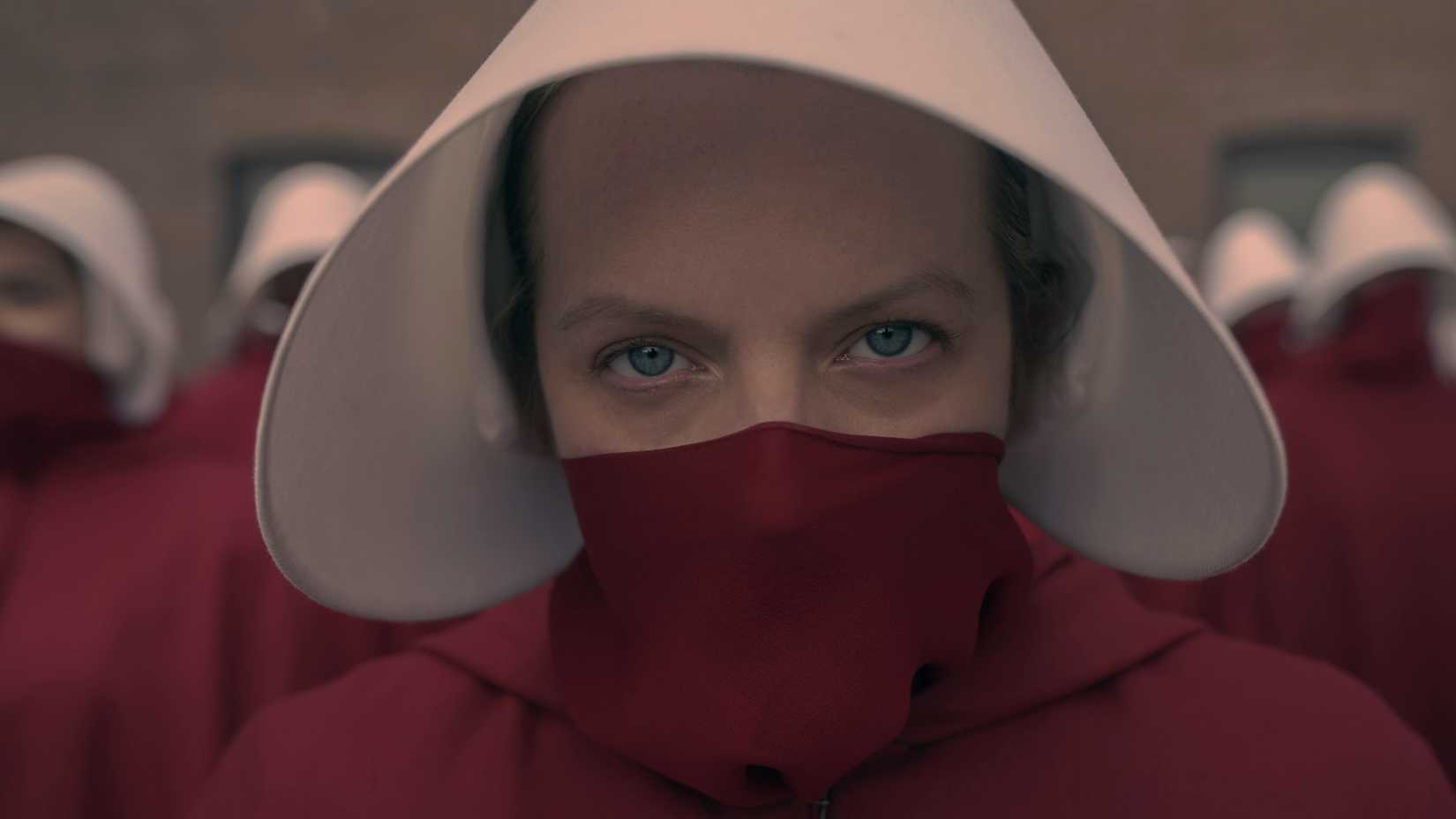
At first glance, the world of Gilead can seem too extreme to be believable. Its system of control, ritualized abuse, public executions, and rigid social hierarchy appear to belong to dystopian fiction.
The disturbing reality behind the story is that Margaret Atwood deliberately built the novel around historical precedents. Atwood has explained that she did not want to include events for which there was no real-world basis. She researched historical examples of oppression and incorporated elements that had occurred somewhere, at some point in history.
That approach gives the television adaptation much of its unsettling power. The horrors experienced by Offred and the other women of Gilead are fictional, but the mechanisms used to control them have recognizable historical roots.
The series therefore asks viewers to do more than follow a conventional dystopian story. It repeatedly places its characters inside systems where authority is abused, personal freedoms disappear, and people are pressured to accept cruelty as normal.
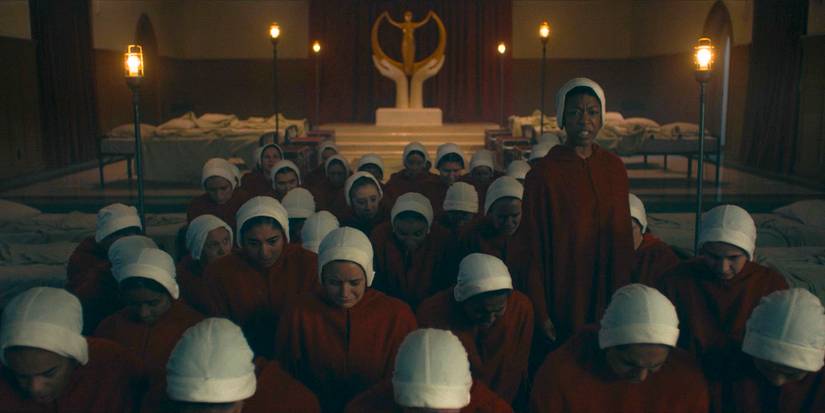
Season 1 establishes that world through Offred’s captivity. The story depicts sexual violence, public executions, forced conformity, and systematic indoctrination as ordinary parts of life under Gilead.
The season also received major recognition from the television industry. At the 69th Primetime Emmy Awards in 2017, The Handmaid’s Tale won eight Emmys, including Outstanding Drama Series, Outstanding Lead Actress for Elisabeth Moss, Supporting Actress for Ann Dowd, Writing for Bruce Miller, and Directing for Reed Morano.
The Television Academy currently lists the series with 77 nominations and 15 Emmy wins.
How the Series Expands on Margaret Atwood’s Novel
The first season remains remarkably close to Atwood’s original book. It adapts almost the entire 1985 novel, including its intentionally ambiguous conclusion.
After that point, the television series had to create its own path.
Season 2 begins expanding beyond the boundaries of the novel, examining the wider consequences of Gilead and the experiences of people trapped within its system. Seasons 3 and 4 broaden the story further by bringing Canada more prominently into the narrative as a potential refuge.
By seasons 5 and 6, resistance, retaliation, personal loyalty, and moral compromise have become increasingly important to the story.
That expansion was possible because the television series had to continue beyond the material contained in Atwood’s first novel. Showrunner Bruce Miller and the writers developed new storylines while using Atwood’s world as their foundation.
Atwood remained involved with the production as a consultant, reading scripts and discussing the direction of the story with Miller. She has also explained that The Testaments, her 2019 sequel to The Handmaid’s Tale, gave the writers ideas about possible directions for the television series.
The relationship between the novels and the television series became even more significant with the publication of The Testaments. Although it is a separate novel, its characters and events offered the television writers another piece of the larger Gilead story.
The Testaments Continues the Story
The world of Gilead does not end with The Handmaid’s Tale.
Hulu has continued the story with The Testaments, an adaptation of Atwood’s 2019 sequel novel. Rather than simply extending June’s story, the new series shifts attention toward a younger generation growing up inside Gilead.
The story follows Agnes, a girl raised within Gilead, and Daisy, a teenager who arrives from outside its borders. Their lives intersect at Aunt Lydia’s elite preparatory school for future wives, where obedience is imposed as part of the girls’ education.
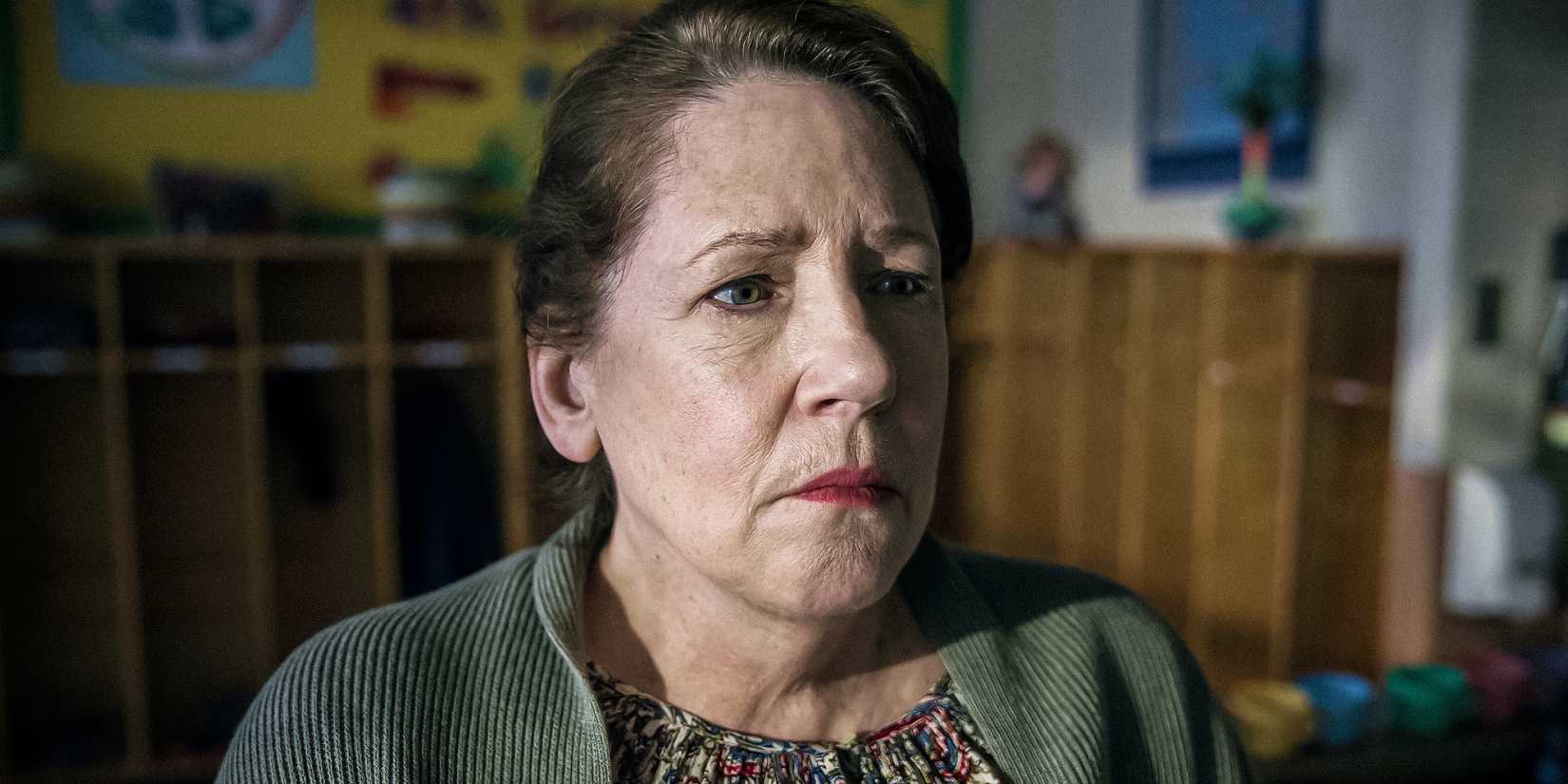
Ann Dowd returns as Aunt Lydia, while Chase Infiniti plays Agnes and Lucy Halliday plays Daisy. Bruce Miller serves as creator, showrunner, and executive producer. Elisabeth Moss is among the executive producers, although she does not return as June Osborne.
The new series premiered on Hulu on April 8, 2026. It also became available through Hulu on Disney+ for eligible bundle subscribers, with the first three episodes released at launch and subsequent episodes arriving weekly through May 27.
For anyone who has already followed June’s journey through all six seasons of The Handmaid’s Tale, The Testaments offers a different perspective on the same dystopian society. For newcomers, meanwhile, the original series provides the foundation for understanding how Gilead was created and why its legacy continues to shape the lives of those who grow up inside it.

The official Hulu trailer introduces Agnes and Daisy and gives viewers a glimpse of the new generation at the center of the story.
The Handmaid’s Tale is demanding television, and its subject matter can be extremely difficult to watch. But its six-season story demonstrates why dystopian drama can remain powerful long after its initial release: the fictional world may be extreme, yet many of the ideas behind it are rooted in documented history.
With The Testaments continuing Atwood’s Gilead universe, this is also a natural moment for viewers to revisit the series that established it.