Unabomber Review: Netflix’s Frustrating Origin Story for One of America’s Most Notorious Villains
Netflix’s Unabomber arrives at an unusually fitting moment. As the world argues over the promise and dangers of artificial intelligence and rapidly advancing technology, the film turns its attention to Ted Kaczynski, the man whose campaign against industrial society made him one of America’s most infamous domestic terrorists.
On paper, it is an intriguing premise. The film comes from Andor director Janus Metz Pedersen and takes an unconventional approach to Kaczynski’s story, dividing its 97-minute runtime between his years as a young Harvard student and the FBI investigation that eventually brought him down.
The problem is that Unabomber never quite decides what kind of film it wants to be.
Part psychological drama, part FBI procedural, and part origin story, the movie connects Kaczynski’s transformation to a series of disturbing psychological experiments conducted while he was at Harvard. The result is occasionally compelling, but the competing storylines leave the film feeling fragmented. More seriously, its emphasis on Kaczynski as a product of those experiments risks turning a convicted terrorist into a tragic figure while giving too little attention to the people who suffered because of his crimes.
Two Timelines Tell the Story of Ted Kaczynski
Unabomber unfolds across two periods.
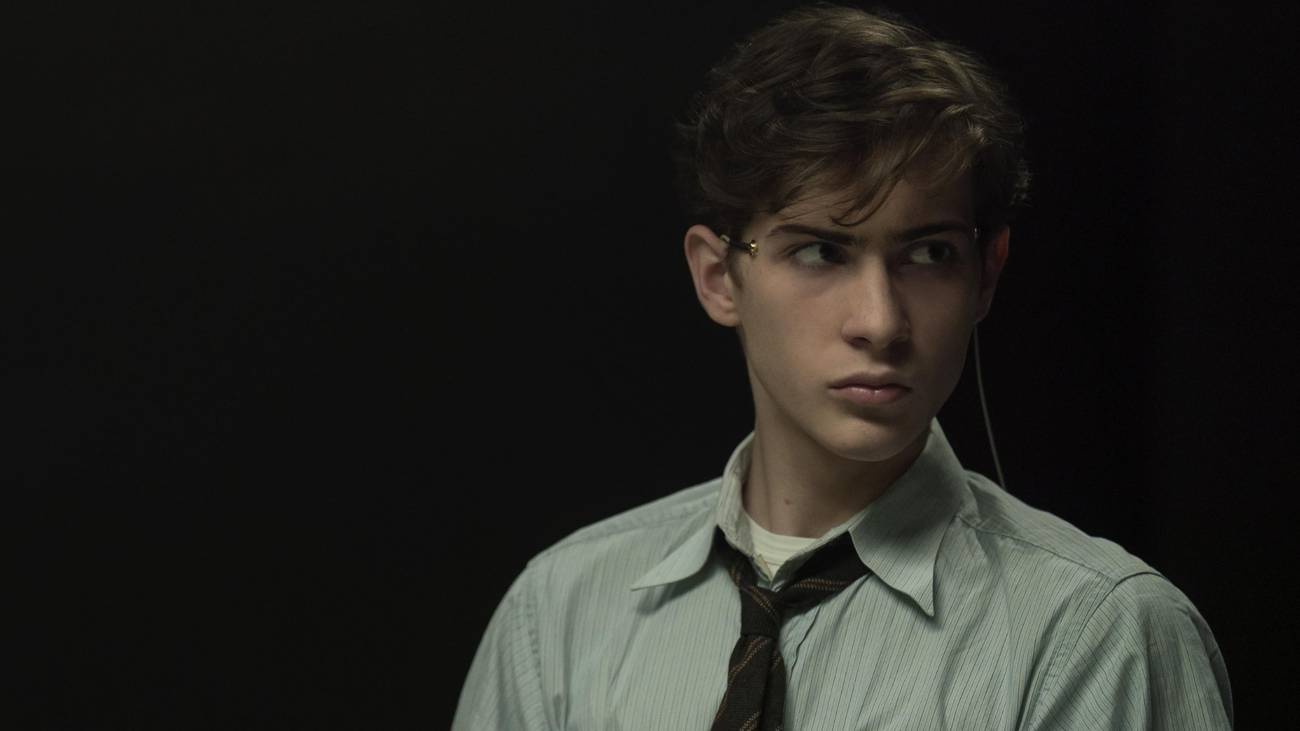
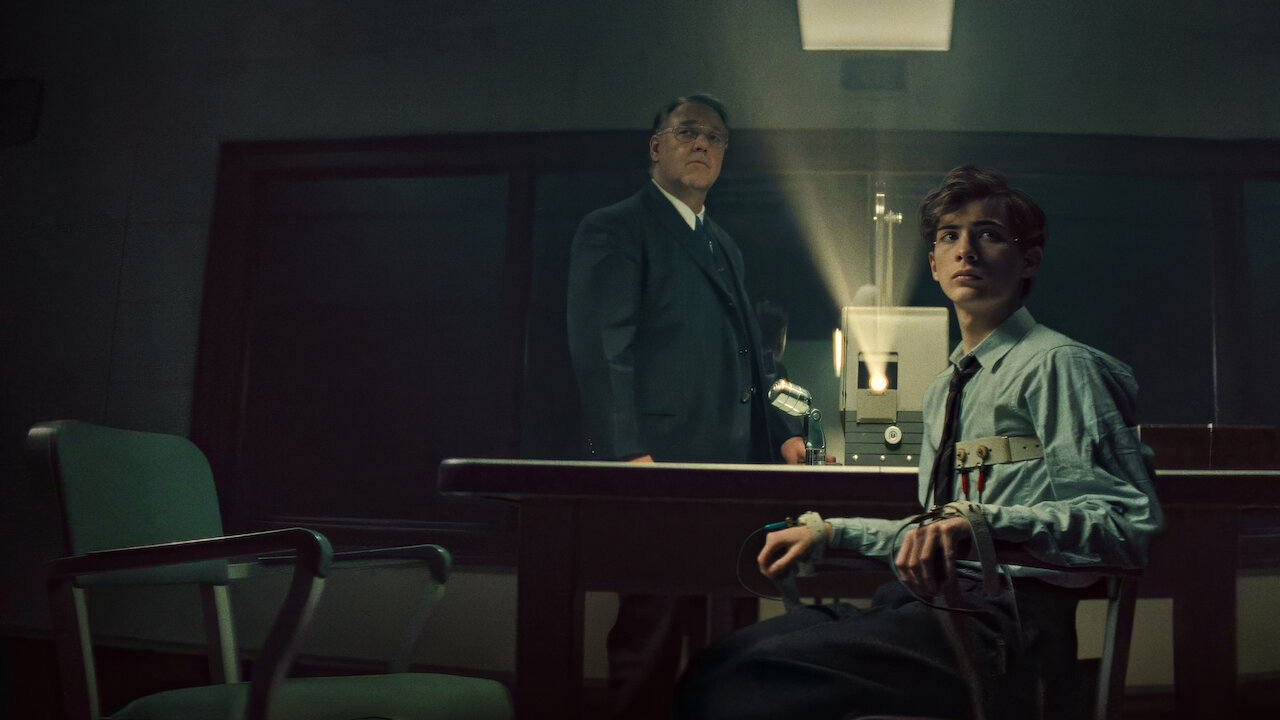
The earlier storyline follows a young Theodore Kaczynski, played by Jacob Tremblay, during his time at Harvard. There, he becomes involved in psychological experiments led by Henry Murray, played by Russell Crowe. Murray was a real Harvard professor whose work included creating a psychoanalytical profile of Adolf Hitler. The experiments depicted in the film were later regarded as highly unethical.
Kaczynski believes he has been selected because of his intellectual and philosophical abilities. Instead, he finds himself subjected to increasingly disturbing psychological tests intended to push subjects to their limits.
The later storyline begins in 1994 with the death of Kaczynski’s penultimate victim and follows the FBI investigation through 1995 and 1996. Shailene Woodley plays FBI Agent Joanne Miller, who becomes convinced that an anti-industrialization loner named Ted Kaczynski is the person behind the Unabomber attacks.
Kaczynski’s bombing campaign lasted 18 years, killing three people and injuring 23 others while targeting figures connected to technology, academia, aviation, and other areas of modern society.
The two timelines gradually move toward one another, with the Harvard story presented as a possible key to understanding the man behind the bombings.
That connection is where the movie becomes most complicated.
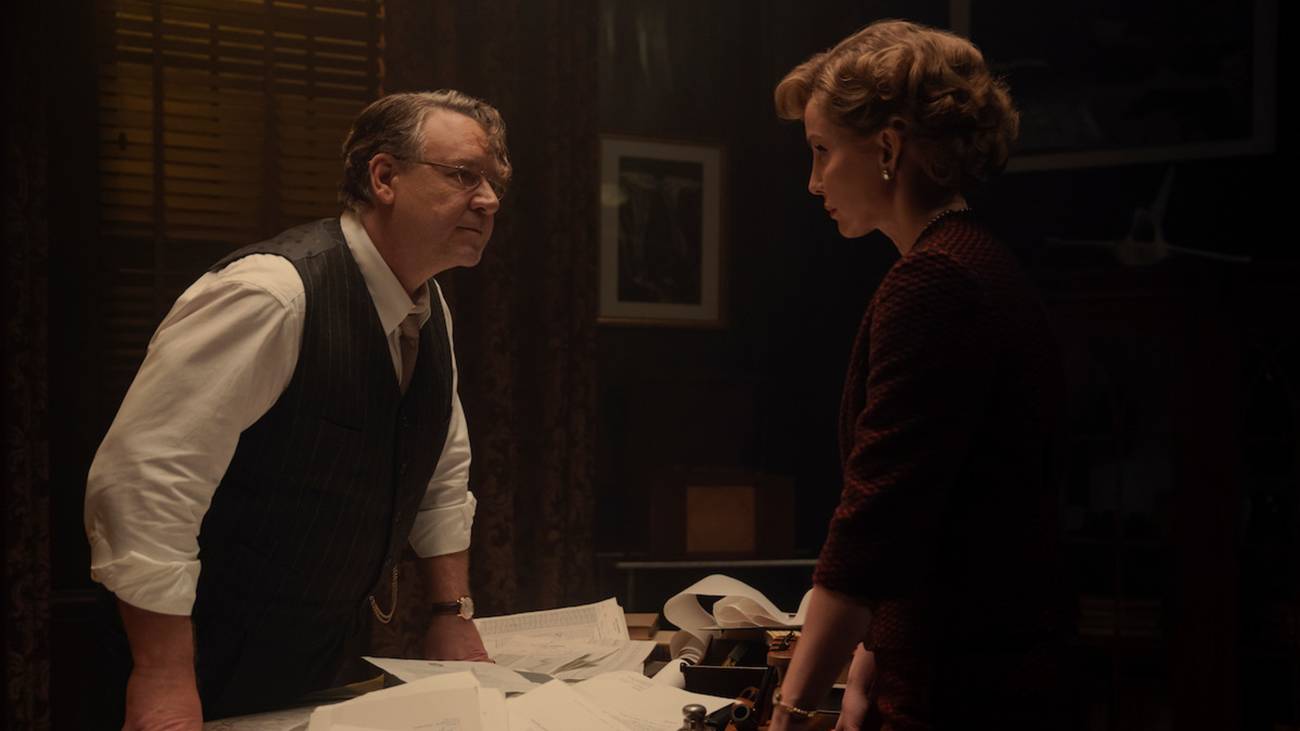
A Strange Combination of A Beautiful Mind and The Silence of the Lambs
The Harvard material has an unexpected resemblance to A Beautiful Mind.
Like John Nash in that film, Kaczynski is presented as an exceptionally intelligent young man struggling to find a place within the world around him. He is socially isolated, absorbed by his own ideas, and increasingly convinced that his intellectual abilities give his life a particular purpose.
The comparison has obvious limits. Nash’s paranoid schizophrenia and Kaczynski’s social difficulties are very different circumstances. What the films share is an interest in brilliant minds that do not fit comfortably into their surroundings.
Unabomber takes that idea in a darker direction. Rather than simply portraying an isolated genius, it examines what happens when someone deliberately places such a mind under extreme psychological pressure.
Tremblay is one of the film’s strongest elements. His performance is deliberately restrained, portraying Kaczynski as detached and difficult to read. There is a similar quality to Aidan Gallagher’s Number Five in The Umbrella Academy: an outsider whose intelligence separates him from everyone around him.
The movie wants the audience to see a young man who is already isolated, then watch as Murray’s experiments place additional pressure on him.
But that approach also creates one of the film’s biggest problems.
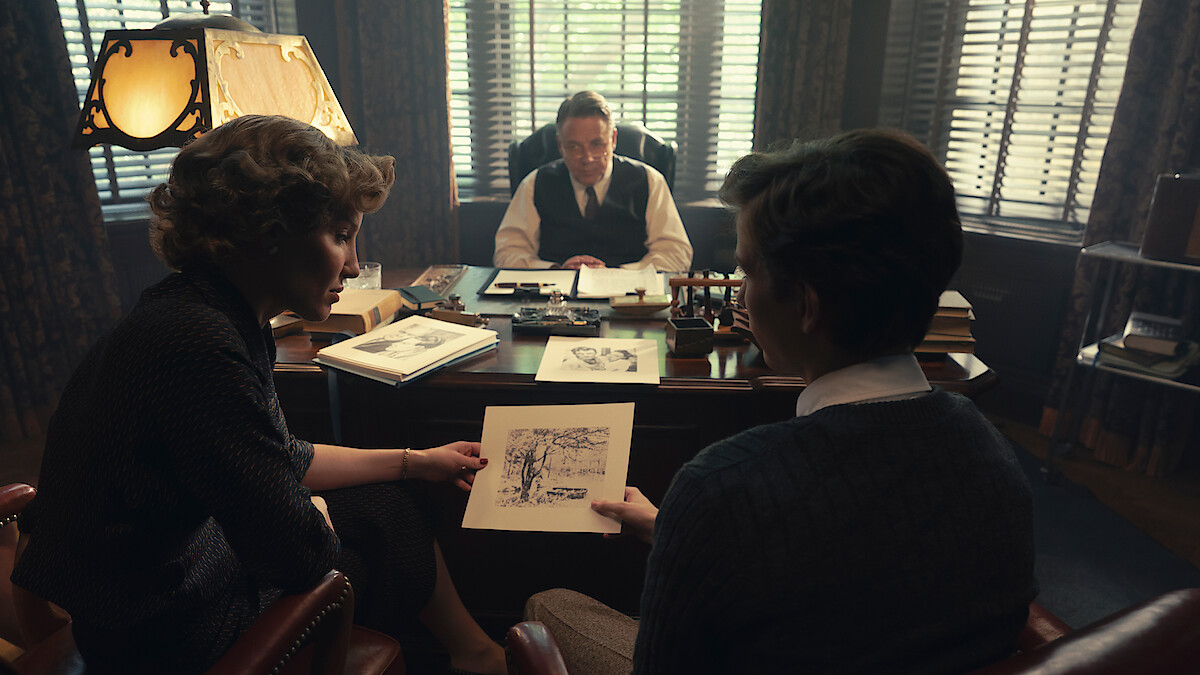
Russell Crowe’s Henry Murray Becomes the Film’s Villain
Russell Crowe plays Henry Murray as an outwardly straightforward man who appears largely indifferent to the consequences of his work.
The film gradually reveals the true nature of Murray’s experiments, creating a shift in how his earlier scenes are understood. He becomes the closest thing Unabomber has to a conventional villain, particularly as his relationship with Kaczynski develops into a battle of wills.
Crowe does not play Murray as the stereotypical monstrous scientist. Instead, there is an unsettling normality to the character. His willingness to continue the experiments despite their consequences becomes disturbing precisely because he rarely presents himself as obviously sinister.
At the same time, the film does not give Murray enough room to become a fully developed character. His history is largely pushed aside so that the story can concentrate on his relationship with Kaczynski.
That makes the character feel less substantial than he could have been.
It is also a surprisingly restrained performance from Crowe, particularly when compared with his portrayal of Hermann Göring in Nuremberg in 2025.
The FBI Story Feels Like a Different Movie
The second timeline shifts the film into familiar true-crime territory.
Woodley’s Joanne Miller effectively becomes Unabomber’s version of Clarice Starling, attempting to understand the person behind the attacks while helping to bring the investigation toward its conclusion.
There is genuine tension in these sequences. The movie borrows some of the atmosphere and investigative rhythm associated with The Silence of the Lambs, building suspense around the search for an elusive killer.
Woodley gives the material enough weight to suggest that this could have worked as a standalone FBI thriller.
The problem is that the storyline is severely underdeveloped.
The film moves through procedural conventions without spending enough time establishing the people involved or allowing the investigation to develop naturally. Kaczynski himself is also largely absent from the later portion of the story, which creates an unusual imbalance in a movie about the Unabomber.
A film closer in spirit to Mindhunter, with considerably more attention paid to the adult Kaczynski and the investigation into his psychology, might have provided a more complete portrait.
Instead, Unabomber spends much more time on the young man at Harvard than on the adult responsible for the bombing campaign.

The Film’s Biggest Problem Is What It Suggests About Kaczynski
The biggest issue with Unabomber is not its individual performances or even its unusual structure. It is the uncertainty surrounding what the movie ultimately wants the audience to believe.
The two storylines feel as though they belong to separate films.
One is a psychological drama about a brilliant but isolated student caught in an unethical experiment. The other is an FBI thriller about the search for a domestic terrorist.
Both could have supported an interesting film. Combining them in such a compressed 97-minute runtime means neither receives enough attention.
More importantly, the structure creates an unmistakable implication: that the Harvard experiments helped create the Unabomber.
Kaczynski himself strongly rejected that interpretation. His position was that his actions were the product of his own rational thinking rather than the result of the Harvard experiments.
The movie gives comparatively little space to that perspective.
That omission matters because the audience is given very little of Kaczynski’s life between the Harvard experiments and the bombing campaign. Apart from what is revealed through Miller’s investigation, the film largely skips the adult Kaczynski.
For viewers unfamiliar with the real story, that can create a particularly straightforward interpretation of events. Kaczynski is introduced as an isolated young intellectual, subjected to psychological abuse, and then the film moves toward the emergence of the Unabomber.
The implication is difficult to miss, even though the historical relationship between the experiments and his later crimes is much more complicated.
When a True Story Becomes an Origin Story
This is where Unabomber begins to resemble Todd Phillips’ Joker.
Like that film, it is interested in the idea of tracing the origins of a notorious figure and exploring the circumstances that may have contributed to his transformation.
The danger is that an origin story can shift attention away from the crimes themselves.
In Joker, that approach famously produced a portrait of a violent character that some viewers interpreted as sympathetic or romanticized. Unabomber runs into a similar problem by focusing so heavily on Kaczynski’s experiences as a young man.
The issue is not that a film cannot examine the forces surrounding a criminal. Understanding how someone reaches a point of violence can be a legitimate dramatic subject.
The problem here is the imbalance.
Unabomber spends substantial time showing Kaczynski as a young man subjected to an abusive psychological experiment, but gives far less attention to the choices he made later, the people he targeted, and the consequences of his campaign.
That makes the film’s central idea feel incomplete.
The movie clearly wants to explore Kaczynski’s hatred of society’s technological direction. But by largely removing the years between Harvard and the bombing campaign, it leaves little room to examine how his worldview developed or how he ultimately chose to act on it.
An Intriguing Idea That Never Fully Comes Together
There are strong elements here.
Tremblay delivers an impressive performance as the young Kaczynski. Crowe brings an unsettling ordinariness to Henry Murray. Woodley provides the FBI storyline with enough tension to suggest a much stronger procedural thriller hiding inside the movie.
The filmmaking also knows how to create suspense, particularly when the two timelines begin to overlap.
But Unabomber never finds a satisfying balance between its competing ideas.
The Harvard storyline is more interesting than the FBI investigation, yet it is also the part that creates the film’s most serious problems. The FBI storyline provides the structure of a thriller but never receives enough character development to become fully engaging.
By trying to make both stories work simultaneously, the movie leaves both feeling incomplete.
That is particularly frustrating because the central question is genuinely fascinating: how much can we understand about a notorious criminal by examining the experiences that shaped him?
Unabomber raises that question but does not explore it with enough depth or clarity.
Instead, it offers a fragmented portrait in which the psychological experiment becomes so central that Kaczynski risks being viewed primarily as its victim.
For a story about a man responsible for killing three people and injuring 23 others, that is a significant imbalance.
Unabomber is therefore an uneven true-crime drama with several promising pieces but no clear identity. Its two timelines could have supported very different movies, and neither is given enough room to become the film it might have been.
The result is a movie that is occasionally compelling, sometimes genuinely tense, and anchored by strong performances, but ultimately muddled in its purpose. Most troublingly, its attempt to create an origin story for Kaczynski risks romanticizing the very figure the film should be examining with greater distance.
Unabomber is available to stream on Netflix worldwide from Friday, September 25, 2026. Netflix lists the film as a drama, thriller, crime movie, and film based on real life, starring Russell Crowe, Jacob Tremblay, and Shailene Woodley.