
A forgotten Norwegian resistance fighter. A country under Nazi occupation. And one young man forced to make a decision that could cost him everything.
While Hollywood has produced countless World War II films, few approach the subject with the quiet intensity and emotional depth of “Number 24” (also known as “Nr. 24”). This Norwegian-language drama tells the remarkable true story of Gunnar Sønsteby, a man who risked his life to fight Nazi Germany’s occupation of Norway and ultimately became the country’s most highly decorated resistance fighter.
Released without the enormous publicity surrounding major Hollywood war productions, the film has quietly established itself as one of the most compelling and underrated historical dramas available on Netflix.
And its message feels particularly difficult to ignore today.
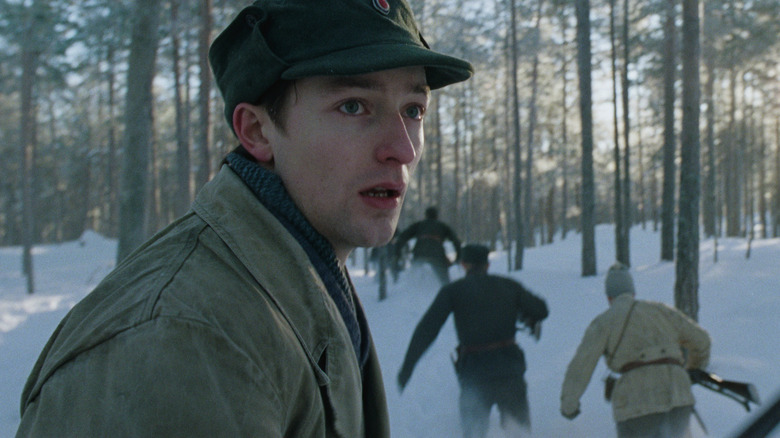
A Young Man Who Refused To Accept Nazi Occupation
What does it take to stand against an invading army when the price of resistance could be your own life?
“Number 24” begins with an elderly Gunnar Sønsteby, portrayed by Erik Hivju, looking back on the defining moments of his life. His reflections transport viewers to Norway in 1940, when Nazi Germany began its occupation of the country.
The story then introduces a much younger Gunnar, played by Sjur Vatne Brean. Initially, he appears to be an ordinary young man trying to maintain some sense of normality. He even returns to his accounting job as the world around him begins to collapse.
But beneath that seemingly ordinary existence lies a decision that will change the course of his life.
A chance encounter with an underground resistance fighter draws Gunnar into a dangerous world of espionage, sabotage and clandestine operations. Before long, he becomes one of the key figures in Norway’s fight against Nazi rule.
One early exchange captures the extraordinary determination behind his decision.
When Gunnar confirms that he is just 25, he is reminded that joining the resistance could mean never growing older. Asked whether he has considered that possibility, he gives a remarkably simple answer:
“I can accept that.”
It is a chilling moment. Gunnar understands exactly what he is risking, yet his commitment to the cause outweighs his fear of death.
For him, the struggle is about something far greater than personal survival.
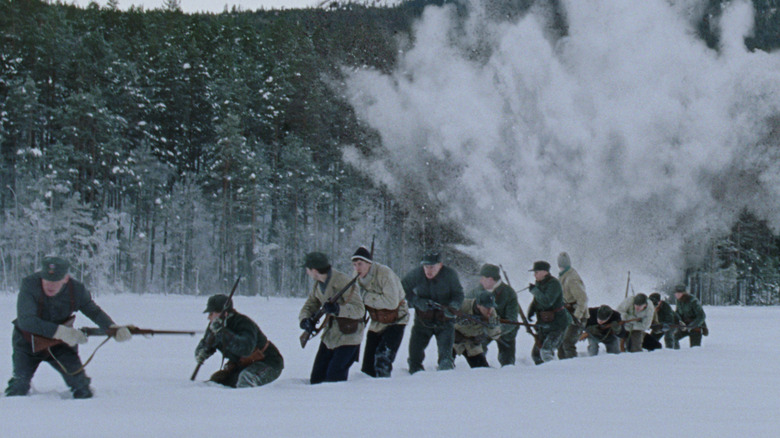
Courage Was Everywhere – Not Just On The Battlefield
One of the film’s greatest strengths is its refusal to portray resistance as the work of a single extraordinary hero.
Gunnar’s courage is reflected in the ordinary people who repeatedly put their own lives in danger to help their country.
Among them is Reidun, a local baker played by Ines Høysæter Asserson, who secretly facilitates meetings between resistance fighters despite the enormous risks involved.
Other moments reveal the brutal reality of life under Nazi occupation. A captured soldier would rather face death than surrender information under relentless torture. Gunnar’s own parents also stand behind their son, fully aware that the discovery of his secret identity as a resistance leader could bring the SS directly to their doorstep.
These are not glamorous acts of heroism.
They are decisions made by people who understand that protecting their freedom may require sacrificing everything they hold dear.
The film’s present-day framing device, which places elderly Gunnar in front of a group of Norwegian students during a lecture, does reveal that he survived the war. Yet that knowledge does little to diminish the tension.
The real question is never simply whether Gunnar will live.
It is how much he and the people around him will have to endure to keep fighting.
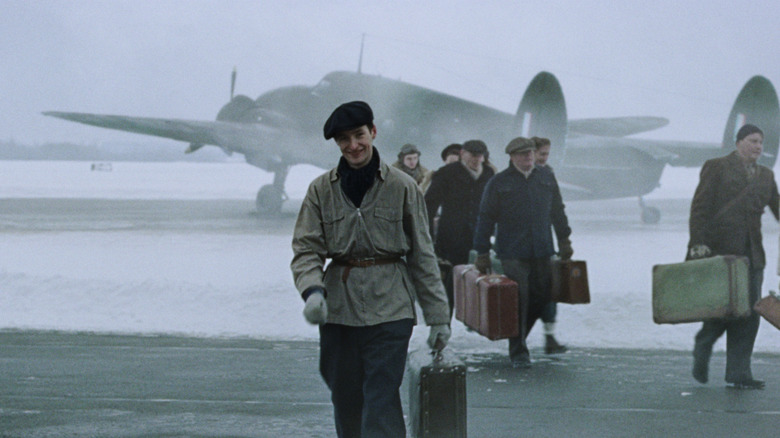
Forget Explosions – The Film’s Attention To Detail Is What Makes It Special
Viewers expecting a nonstop spectacle of massive explosions, elaborate action sequences and Hollywood-style destruction may be surprised by “Number 24.”
Although the film contains several tense sabotage operations and moments of hard-won satisfaction as Norwegian resistance fighters strike back against their Nazi occupiers, its greatest achievement lies elsewhere.
It makes the ordinary mechanics of resistance feel just as gripping as the most dramatic battlefield confrontation.
Rather than turning espionage into a glamorous adventure, director John Andreas Andersen and screenwriters Espen von Ibenfeldt and Erlend Loe focus on the painstaking work behind an underground movement.
Gunnar spends much of his time gathering intelligence, establishing contacts, building trust and carefully avoiding Nazi patrols throughout Oslo. Every meeting carries risks. Every connection matters. Even the smallest mistake could expose the entire network.
The visual approach reinforces that atmosphere.
Cinematographer Pål Ulvik Rokseth uses a deliberately muted, washed-out palette that reflects the bleakness of occupied Norway. Dramatic lighting and more experimental visual touches appear sparingly, including an unusual moment in which Gunnar appears to witness an event he could not realistically have seen and an unexpected, anachronistic Radiohead needle drop.
These choices give the film a distinctive identity without overwhelming its historical setting.
The result is a war drama that feels grounded, restrained and remarkably attentive to the details other productions might overlook.
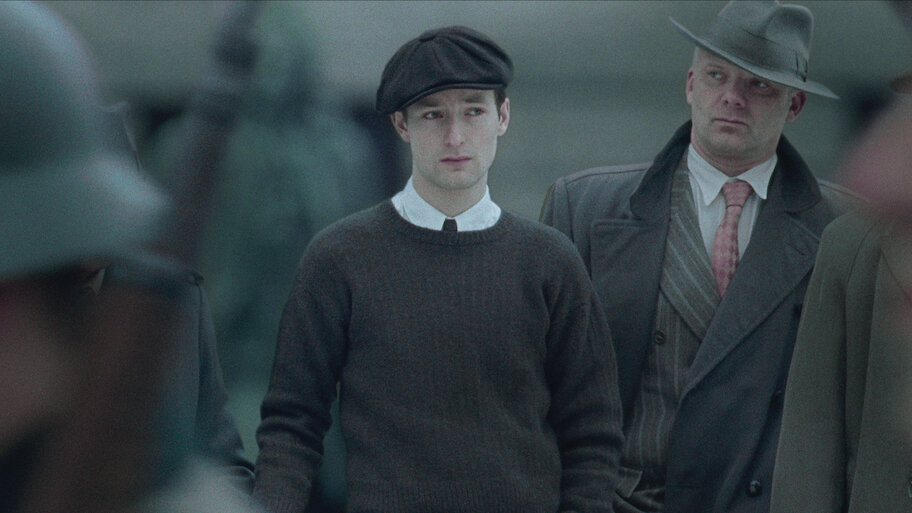
The Price Of Fighting For Freedom Takes A Devastating Toll
Perhaps the most heartbreaking aspect of “Number 24” is what it reveals about the personal cost of becoming a resistance fighter.
Gunnar knows that he cannot afford distractions. He gives up ordinary pleasures, including relationships and drinking, and rarely allows himself the luxury of relaxing.
His entire existence revolves around the mission.
But the film makes clear that such discipline comes at a devastating personal cost. The emotional consequences follow him long after the fighting ends, with his older self still carrying the weight of PTSD and memories from the occupation.
That connection between his wartime experiences and his later life gives the story much more emotional depth than a conventional heroic biopic.
As the film approaches its conclusion, its central message becomes increasingly clear: fighting for freedom demands sacrifices that do not simply disappear when a war is over.
The people who resist authoritarianism must live with the consequences of their choices, even when those choices are necessary.
And that is what makes Gunnar Sønsteby’s story so powerful.

Why “Number 24” Deserves A Place On Your Netflix Watchlist
Unlike many World War II productions that rely on spectacular action or familiar patriotic formulas, “Number 24” finds its emotional strength in restraint, historical detail and the extraordinary courage of ordinary people.
Its greatest achievements include:
- A remarkable true story: The life of Gunnar Sønsteby, one of Norway’s most celebrated resistance fighters.
- A different perspective on World War II: A closer look at the underground networks and dangerous decisions behind resistance movements.
- Powerful performances: Erik Hivju and Sjur Vatne Brean bring different stages of Gunnar’s life to the screen with striking conviction.
- A deeply human message: An exploration of courage, sacrifice, trauma and the lasting cost of defending freedom.
Ultimately, “Number 24” is more than another film about the Second World War. It is a reminder of what can happen when ordinary people refuse to surrender to fear, even when the odds are overwhelmingly against them.
Gunnar Sønsteby’s story may not be as widely recognized as those of more familiar wartime figures, but it is precisely the kind of historical chapter that deserves to be remembered.
“Number 24” is currently streaming on Netflix.