Criminal: UK Turns a Police Interrogation Into a Gripping Psychological Thriller
What if an entire crime thriller unfolded in one interrogation room?
That is the central idea behind Criminal: UK, Netflix’s tightly constructed police-procedural anthology, where detectives question suspects accused of serious crimes and try to separate truth from carefully constructed stories. There are no sprawling investigations or elaborate chase sequences driving the drama. Instead, the tension comes from a question, a pause, a contradiction, or a sudden change in a suspect’s story.
The approach has earned the series a 92% Tomatometer score on Rotten Tomatoes, based on 45 critic reviews, while its audience score stands at 88% from more than 100 ratings. Rotten Tomatoes lists both seasons as available on Netflix.
And among the actors who step into that pressure cooker are David Tennant and Kit Harington, each appearing as a suspect in a particularly tense episode.
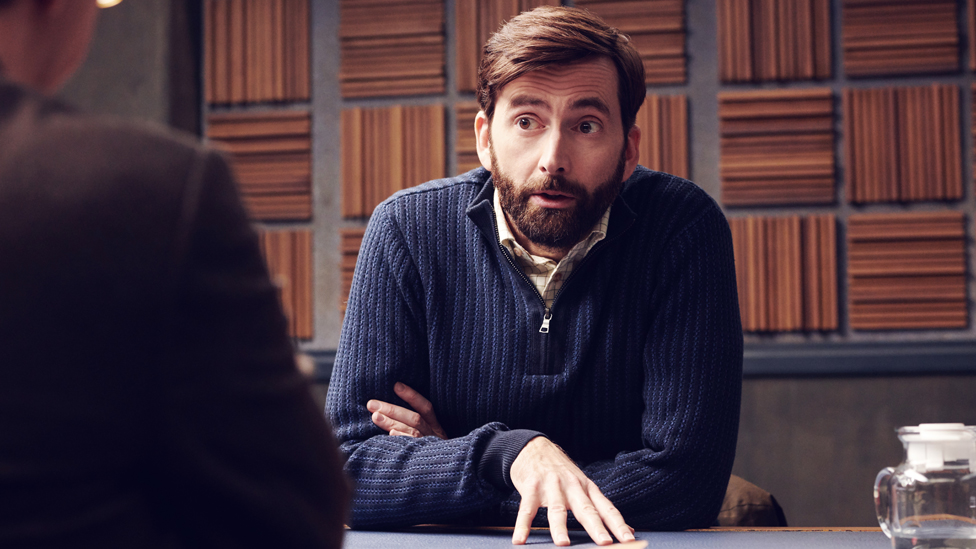
A crime drama where the interrogation is the main event
Criminal: UK premiered on Netflix on September 20, 2019, with a second season following on September 16, 2020. Across its two seasons, the anthology consists of seven episodes, each built around a different investigation and suspect.
The premise is deliberately stripped down. London investigators sit across from suspects inside an interrogation room, working through their accounts in an attempt to uncover what actually happened.
Netflix describes the series as a story of London investigators questioning suspects accused of grievous crimes, with the truth gradually emerging through those interviews.
That confined setup gives the series its distinctive atmosphere. The interrogation room becomes the entire battlefield. Detectives have to choose their questions carefully, while suspects have to decide what to reveal, what to deny and how much control they can maintain.
A seemingly minor detail can suddenly become important. A confident answer can create another problem. Even silence can carry meaning.
The result is a police drama in which conversation replaces car chases and conventional action sequences.

David Tennant anchors one of the series’ darkest cases
The first episode, titled Edgar, puts Doctor Who star David Tennant at the centre of the drama.
Tennant plays Dr. Edgar Fallon, a doctor suspected of sexually assaulting and murdering his teenage stepdaughter. Netflix’s episode description places the investigators under time pressure as they attempt to get through to the stone-faced suspect.
Rather than following detectives as they gather clues across London, the episode concentrates on what happens inside the interrogation room.
That makes Tennant’s performance especially important. The audience has to watch Edgar’s responses closely while the investigators challenge his account and attempt to determine what lies behind his controlled behaviour.
The Guardian highlighted Tennant’s performance when it reviewed the series in 2019, describing the opening UK episode as particularly strong and comparing the show’s interrogation-driven approach with the most intense questioning scenes in Line of Duty. The review gave the series four stars.
The result is a disturbing introduction to the show’s central idea: the interrogation itself can provide enough tension to carry an entire episode.

Kit Harington faces the detectives in Season 2
The second season brings Kit Harington into the interrogation room as Alex, an arrogant businessman accused of rape by a woman who works for him.
The episode, also titled Alex, premiered on September 16, 2020 and runs for 46 minutes. Netflix’s synopsis describes investigators working with limited evidence as they question the businessman about the allegation.
As with Tennant’s episode, the series avoids giving viewers a straightforward path to the answer. The investigation develops through questioning, competing accounts and the details that emerge during the interview.
Harington’s appearance also demonstrates how the anthology format works. Rather than building the entire series around one recurring suspect or mystery, Criminal: UK brings a different high-profile performer and case into the same interrogation-room framework.
Season 2 also features Sophie Okonedo, Sharon Horgan and Kunal Nayyar, among others, alongside the returning core cast.

Why the one-room format is so effective
The show’s greatest creative gamble is also its defining feature.
Almost everything happens in one location. There are no elaborate crime scenes competing for attention, and the story does not need to send detectives racing from one part of London to another.
Instead, Criminal: UK asks whether a conversation can be enough.
The answer comes through the performances and writing. Each interrogation has its own rhythm, with investigators gradually testing the suspect’s story and looking for inconsistencies.
That creates a particularly intimate kind of suspense. The viewer is effectively placed inside the room with both sides of the confrontation, watching the pressure build as the questioning continues.
Rotten Tomatoes’ critics consensus for Season 1 similarly points to the show’s claustrophobic style and constantly shifting narratives as central elements of its appeal, describing the result as both unsettling and compelling. Season 1 currently carries an 85% Tomatometer score from 39 reviews, while Season 2 is listed at 100%.
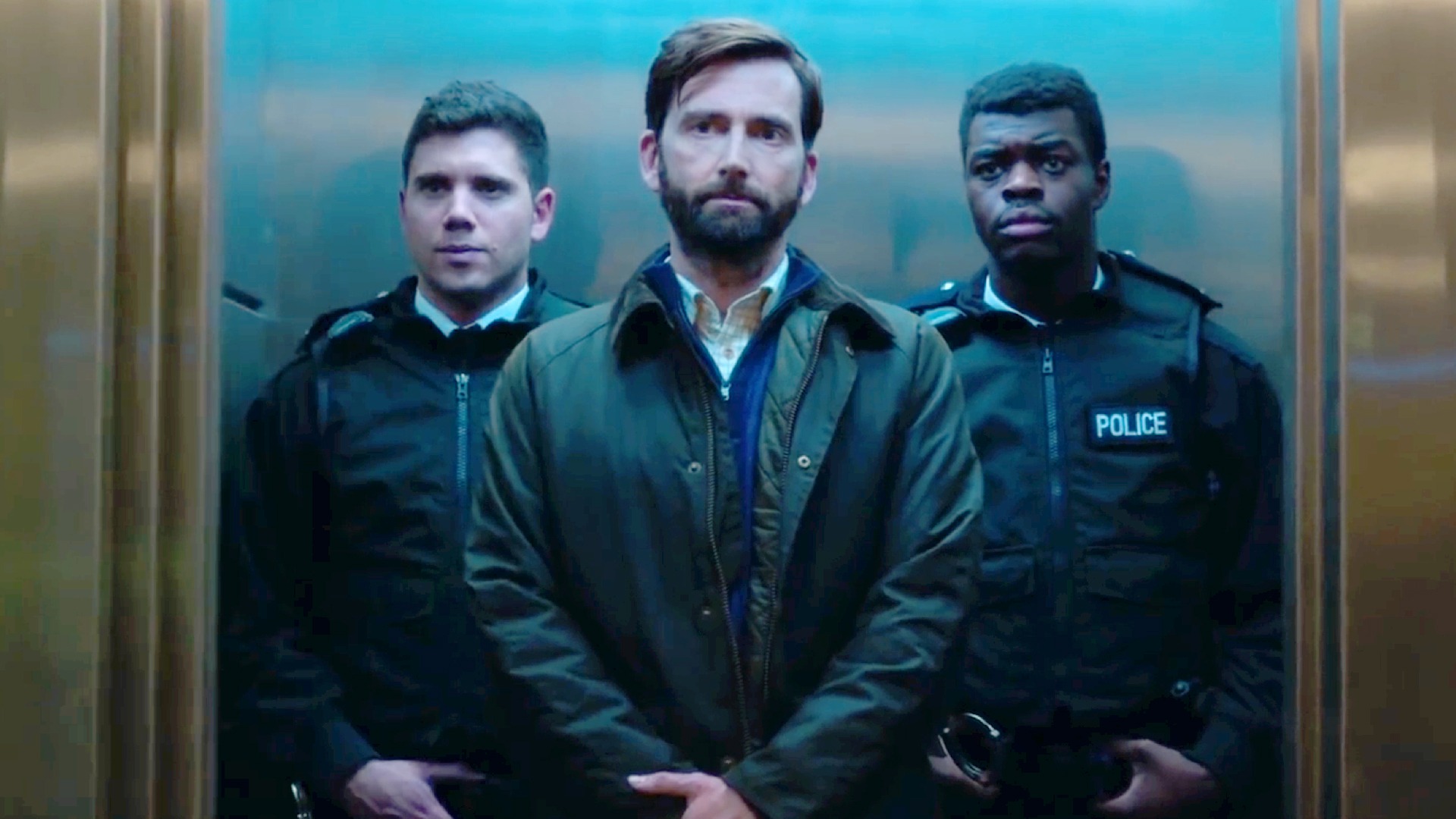
The Line of Duty comparison makes sense
The Guardian’s 2019 review compared Criminal with Line of Duty, particularly its strongest interrogation sequences. Both series place considerable emphasis on police questioning, procedural detail and the difficult distinction between truth and deception.
But Criminal: UK takes that idea and removes much of the surrounding machinery.
There is no need to wait for the interrogation to become one scene among many. The interrogation is the story.
That makes the series an unusual entry in the British crime-drama landscape. Its tension depends heavily on dialogue, acting and the gradual discovery of information rather than spectacle.
A strong ensemble beyond the headline stars
David Tennant and Kit Harington may be the most recognisable names among the guest cast, but the series is built around a larger ensemble.
Katherine Kelly plays DCI Natalie Hobbs, while Lee Ingleby plays DI Tony Myerscough and Rochenda Sandall plays DC Vanessa Warren. Shubham Saraf appears as DC Kyle Petit, with Mark Stanley as DC Hugo Duffy.
The anthology structure gives these performers room to interact with a succession of very different suspects.
That variety is part of what keeps the format from becoming a simple repetition of the same interrogation. Each case brings a new personality, a new accusation and a different set of uncertainties into the room.
Viewer reactions have also singled out the acting and writing as major strengths. One viewer praised the show’s performances and simple but effective storytelling, while another said David Tennant initially drew them in but that the wider cast, particularly Lee Ingleby, kept them watching.
A Netflix crime series built on psychological pressure
Criminal: UK takes a premise that sounds almost minimalistic and turns it into a tense psychological drama.
The detectives have a room, a suspect and a limited amount of time. Their job is to work through the story in front of them and find the weaknesses that might reveal the truth.
The suspects, meanwhile, have to maintain their accounts under sustained questioning.
That simplicity gives the series its particular identity. Every episode becomes a battle of patience, observation and persuasion, with performances carrying much of the weight that action normally provides in a crime thriller.
With two seasons on Netflix, David Tennant’s unsettling appearance in the first season, Kit Harington’s role in the second, a strong ensemble and a 92% overall Tomatometer score, Criminal: UK remains a distinctive choice for viewers looking for a British crime thriller built around interrogation rather than spectacle.
And once the questioning begins, there is very little room for anyone in the room to hide.