Why ‘Three Lions’ Never Dies: How England’s Football Anthem Became a World Cup Tradition

Every time England make a deep run at a major tournament, the same thing happens. Stadiums erupt. Pubs sing in unison. Streaming numbers spike. And a song released in 1996 suddenly feels brand new again.
England’s latest World Cup run has once again sent Three Lions back into the spotlight. Thirty years after it first became the soundtrack of Euro 96, the song is once again climbing streaming charts and dominating football conversations — proof that some anthems don’t simply survive. They return whenever England dare to believe again.
What Is ‘Three Lions’?
Three Lions was released on May 20, 1996, written for England’s hosting of that year’s European Championship. The melody came from Lightning Seeds frontman Ian Broudie; the lyrics from comedians David Baddiel and Frank Skinner, then co-hosts of the TV show Fantasy Football League.
Broudie deliberately avoided anything nationalistic. He said it was more about “being a football fan, which, for 90% of the time, is losing.” That self-deprecating DNA is exactly why it lasted. Unlike a victory anthem, it was built for the long wait before one — and England fans have always understood that wait better than most.
Why It Never Gets Old
Most sports anthems celebrate victory. Three Lions celebrates hope before victory — and that is a far harder emotional note to hit.
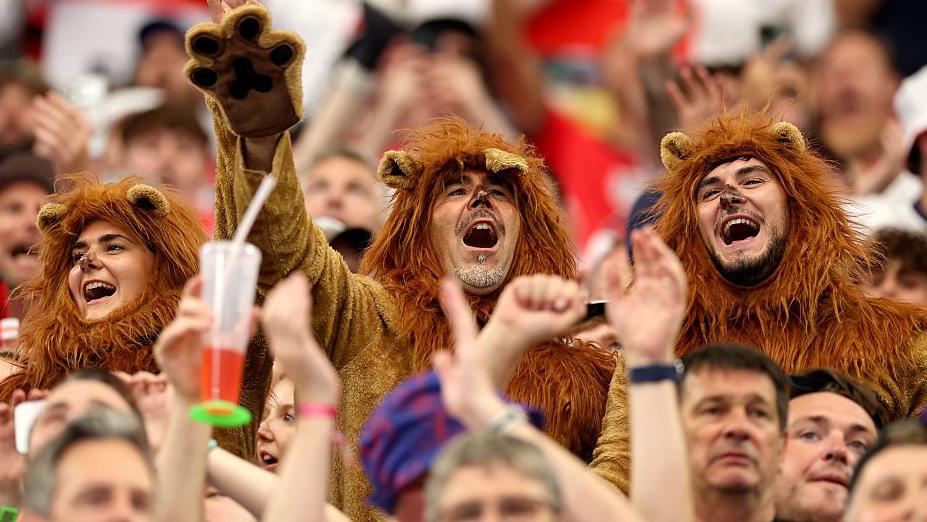
The chorus does something rare in pop music: it turns collective doubt into collective identity. When thousands of supporters sing it together, the England football song stops being about a result and becomes about shared memory, shared disappointment, and the particular stubbornness of still believing anyway. That emotional honesty is what keeps bringing it back. It sounds like real fans rather than a campaign.
Some songs soundtrack a tournament. Three Lions soundtracks a national emotion.
Four Number Ones and a Song That Keeps Returning
What separates Three Lions from every other England World Cup anthem statistically is almost absurd. It is the only song to reach UK Number One on four separate occasions with the same artist — twice in 1996, once during the 1998 World Cup, and again in 2018 when England reached the World Cup semi-finals. No other football song has demonstrated that kind of recurring commercial life.
That 2018 return is the most remarkable. The song jumped from Number 24 to Number One in a single week — 22 years after its original release. Since then it has accumulated over 61 million Spotify streams and more than 52 million YouTube views. For a track initially dismissed as a tournament cash-in, those are extraordinary numbers for any England football song, let alone one entering its fourth decade.
Why “Football’s Coming Home” Became a Cultural Catchphrase
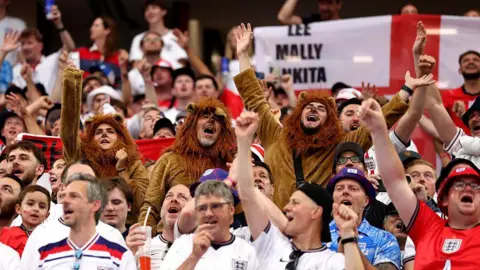
The lyric originally referred to Euro 96 being staged in England, the birthplace of the modern game. Over time, however, fans detached it from that specific tournament and transformed it into a slogan that now resurfaces every time England compete on the biggest stage.
What followed was something rarer: a phrase that holds multiple meanings simultaneously. Hope. Irony. Self-awareness. A stubborn optimism that refuses to take itself entirely seriously. “Football’s Coming Home” became a meme before the word existed in its current form, and survived the internet era precisely because it already understood the joke — and because the joke never stopped being true.
That complexity is why the phrase works for believers and cynics at the same time, which is why it has outlasted every tournament that failed to deliver the result.
The 2026 Return
The 2026 World Cup gave the anthem another chapter. Baddiel, Skinner & Lightning Seeds released a 30th anniversary edition on June 12, 2026 — the day after the tournament’s opening ceremony — timed precisely for England’s campaign.(the main opening ceremonies took place on June 11–12 across the host nations).
It is the latest in a long line of updated versions: Three Lions ’98, a 2010 charity remake featuring Robbie Williams, a Lionesses version for the 2022 Women’s Euros, and a Christmas edition that same year. Each release has reinforced rather than diluted the original. Rather than modernizing the song, the anniversary version reaffirmed what audiences already loved about it: hope that survives disappointment.
As of early July 2026, the track sits at No. 35 on the UK Official Singles Chart (up from lower positions in recent weeks) and continues to rack up streams, with the primary 1996 remastered version alone surpassing 64.8 million plays on Spotify.
Why It Trends Every Tournament — And Will Keep Doing So
Every major England tournament run follows the same pattern. Match results bring new listeners, social media revives the clips and the memes, and younger fans discover the England football anthem for the first time. Then, when the campaign ends — whatever the result — the song retreats quietly, waiting for the next one.
That cycle is not nostalgia. It is renewal. Three Lions does not feel like a relic when it returns because the emotional situation it describes never really changes. England are always on the verge of something. The song was written for exactly that feeling, and that feeling does not expire.
That is why Three Lions keeps returning. Not because England always win, but because England always believe they still might.
FAQ
Q: Who wrote “Three Lions”? The music was written by Ian Broudie of the Lightning Seeds. The lyrics were written by comedians David Baddiel and Frank Skinner, who performed the song alongside Broudie.
Q: Who sang “Three Lions”? It was performed by Baddiel, Skinner & Lightning Seeds — David Baddiel, Frank Skinner, and the Lightning Seeds fronted by Ian Broudie.
Q: When was “Three Lions” released? Originally May 20, 1996, for UEFA Euro 96. A 30th anniversary edition was released in June 2026 ahead of the FIFA World Cup.
Q: How many times did “Three Lions” reach Number One? Four times — in 1996 (twice), 1998, and 2018 — making it the only song to reach UK Number One four times with the same artist.
Q: Is “Three Lions” the England national anthem? No. The official anthem is God Save the King. Three Lions is an unofficial fan anthem that has become inseparable from England’s tournament identity.
Q: Why do England fans sing “Football’s Coming Home”? The phrase began as a reference to football returning to its modern birthplace in England for Euro 96, but has since become a cultural shorthand for English hope, self-deprecation, and the particular stubbornness of believing again after years of near-misses.