The transfer portal’s fingerprints were all over the 2022-23 SEC season. The SEC welcomed six first-year coaches and predictable roster overhauls ensued. Six transfers from the 2022 cycle ended up finishing among the SEC’s top 20 scorers last season.
Chris Beard (Ole Miss) is the only new SEC coach, but the rest of the league hit the transfer portal very hard yet again in the 2023 cycle. The 14 SEC schools have combined to land 59 transfers so far ahead of the 2023-24 season. LSU, Arkansas, Florida, Georgia, Missouri and Ole Miss have all landed at least five transfers. It’s not all because of glitzy Name, Image and Likeness (NIL) deals.
“These kids are leaving for a lot of reasons,” Louisiana Tech coach Talvin Hester said. “I know a lot of people are talking about money, but most of these kids are leaving because of playing time.
But what are realistic expectations for each SEC transfer? There’s not enough room for each newcomer to be a star. The minutes and respective job descriptions can be complicated to sort out. The summer is when the first rotation drafts are crafted, and the fight for roles gets started. Let’s dive in.
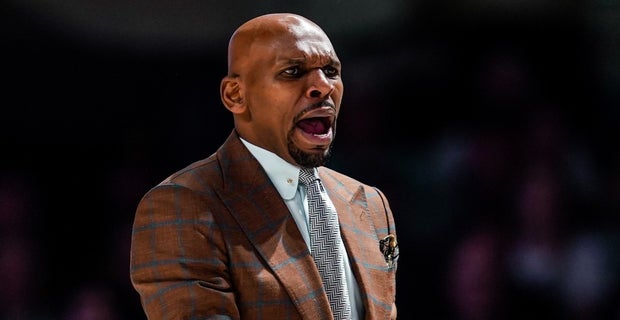
Ven-Allen Lubin, from Notre Dame: Rotation player, potential starter. Lubin has three more years of eligibility, and he should get every opportunity to earn at least 20 minutes per game next season. Lubin will be a big part of Vanderbilt’s equation to win the rebounding battle, but he might be able to earn a role as a reliable source of rim-pressure. Post-ups weren’t a big part of Vanderbilt’s offensive repertoire last year, but Lubin (1.179 points per possession on 39 post-up chances) was sneaky-efficient at Notre Dame.
Tasos Kamateros, from South Dakota: Rotation player, potential starter. Kamateros seems destined to compete with Lubin for minutes at the 5. Potentially splitting those 40 minutes could make some sense. Kamateros isn’t much of a rim-protector, but he’s a legitimate pick-and-pop weapon. Kamateros has drained more than 50 3s in each of the last two years, and he shot over 40% from downtown in 2022-23.
Evan Taylor, from Lehigh: High-level rotation player, potential starter. Taylor was one of the top catch-and-shoot assassins in the transfer portal, draining 47.3% of his catch-and-shoot 3s last season. He’s a perfect floor-spacer to play alongside Tyrin Lawrence and Ezra Manjon. It might be hard for Jerry Stackhouse to keep the veteran wing off the floor, especially when Vanderbilt plays its four-guard lineups.
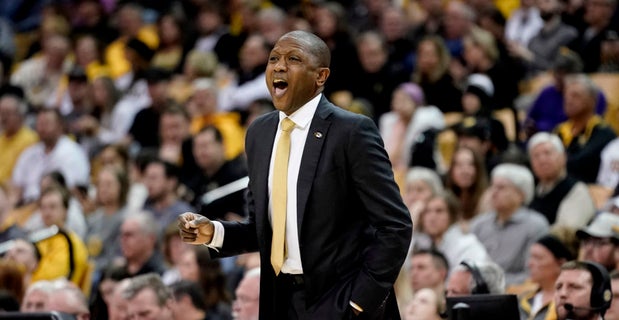
John Tonje, from Colorado State: Potential starter. Colorado State’s smart coaching staff used Tonje in a lot of different ways. The 6-foot-5, 210-pound wing is comfortable moving without the ball, operating in ball screens, flying around screens and even flirting with some post-ups against the right matchup. Tonje can guard up and down the lineup and projects to be a switchy Swiss Army Knife on defense.
Tamar Bates, from Indiana: Wing rotation. Indiana asked Bates asked to basically space the floor and play defense. He only had 31 ball-screen reps last season, according to Synergy. Can he do more? Will Missouri put the rock in his hands more and live while he grows as a decision-maker? That remains to be seen. But the former ballyhooed recruit should have opportunities to get his game on in transition. Bates has to find a way to get more free throw attempts. Missouri has the scheme and the opportunity to let him show more of his game. But he has to beat out some talented dudes for minutes.
Caleb Grill, from Iowa State: High-level role player. Grill adds remarkable gravity to Missouri’s offense. There are some size concerns about playing Grill alongside both of Missouri’s point guards (Sean East and Nick Honor), but Grill can really defend and he guarded bigger wings often at Iowa State. The Cyclones’ slow pace kept Grill from getting out in transition often, but Missouri will change that. Grill’s ability to shoot off-movement will be utilized early and often by Gates.
Jesus Carralero, from Campbell: Frontcourt depth piece. Don’t overlook Carralero. We’ll see what type of role he can carve out, but the 6-foot-8, Campbell transfer has some intriguing playmaking on his resume. Missouri’s scheme requires sharp decision-makers who can make reads in a split second. Carralero can give Gates a fascinating secondary creator, but he likely needs to show he can knock down catch-and-shoot threes at a high clip to stay on the floor.
Connor Vanover, from Oral Roberts: Potential starter. Vanover does not have much competition for minutes at the 5. The 7-foot-5 center is a legitimate rim protector who can knock down threes when he gets his feet set. He’s a real weapon. Spending a year in Oral Roberts’ scheme with a wizard point guard like Max Abmas should help Vanover transition back to the SEC.
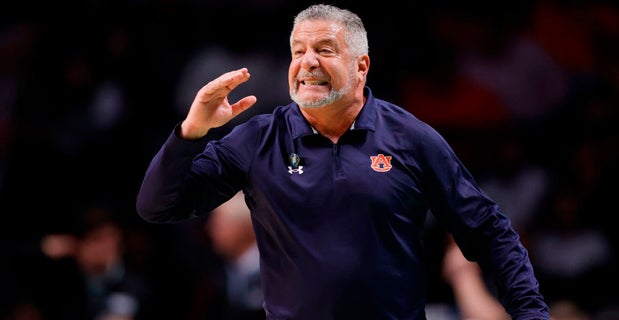
Denver Jones, from FIU: Potential lead guard. Jones is a flamethrower. His metrics were off the charts last year. Jones shot the cover off the ball from three-point range, converted at a high clip in the midrange and shot nearly 70% at the rim, according to CBBAnalytics. Jones checks off every box for Auburn. He came to the Tigers to compete to be the alpha of this backcourt. Let’s see if he can earn it.
Chaney Johnson, from Alabama-Huntsville: Depth. Auburn will have some interesting lineup decisions to make. Johnson can knock down a three, but he’s really more of a low-volume shooter who does most of his work in the paint. How does that work when Johni Broome and Jaylin Williams are on the floor? Can Johnson play the 3? Or will he compete for the minutes as a rotation piece at the 4? That seems most logical.
Addarin Scott, from Navarro College: Frontcourt depth. Auburn’s frontcourt picture is set in stone as long as Broome and Williams are healthy. But Scott is an intriguing long-term piece who was an outstanding offensive rebounder at the Junior College ranks.
Chad Baker-Mazara, from Northwest Florida State: High-level rotation player. Baker-Mazara can help Auburn next year. A lot. The well-traveled wing has shot it well at every single stop. That’ll get him on the floor. His defense will be the swing skillset that determines just how big his role will be.
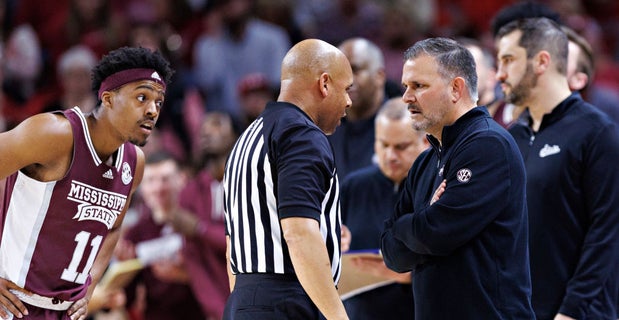
Andrew Taylor, from Marshall: High-level rotation player, potential starter. Mississippi State’s biggest objective was getting Tolu Smith back for another season. But improving its outside shooting was a second big key. Taylor is the fix. Taylor splashed 57 catch-and-shoot three-pointers last season. Mississippi State only made 178 threes as a team last year.
Jimmy Bell Jr., from West Virginia: Frontcourt depth. Mississippi State needed a bruising center who can withstand the physicality of some strong SEC centers like Johni Broome (Auburn) or Julius Marble (Texas A&M). Bell won’t be asked to go get his offensively, but the West Virginia product is an ideal backup center for Smith and Chris Jans.
Jaquan Scott, from Salt Lake Community College: Frontcourt depth. Scott was a double-double machine in JUCO, but he’ll be competing for minutes at the 4 behind DJ Jeffries.
Trey Fort, from Howard College: Backcourt depth. Jans loves dipping into the JUCO ranks for sneaky-good pieces. Fort is another gem. Fort was a big-time scorer and shot-maker. He and Taylor can help fix Mississippi State’s shooting woes. This backcourt is wide open, begging for someone to take over as the premier piece. Fort will get a shot.
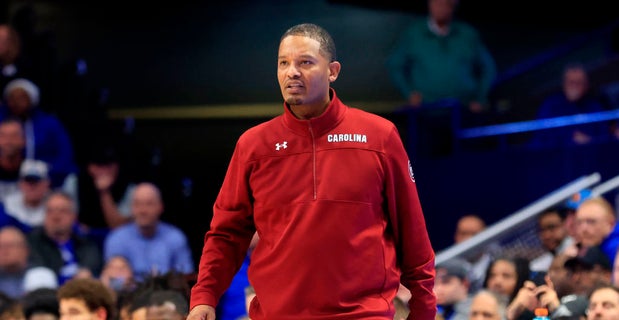
Ta’lon Cooper, from Minnesota: Starter. Cooper is an interesting player. South Carolina desperately needed a veteran point guard to make Meechie Johnson’s life easier. On paper, Cooper can knock down threes at an efficient clip while distributing the ball across the floor. But he has to find a way to become a legitimate difference-maker inside the arc and cut down on the turnover rate a bit to be a big needle-mover for South Carolina.
B.J. Mack, from Wofford: Starter. South Carolina’s frontcourt just didn’t have a piece like Mack. The Wofford product isn’t going to wow you with dunks or above-the-rim aerial shows, but he’s really crafty and is comfortable draining threes or shot-faking and attacking downhill. Mack projects to be a double-digit producer.
Myles Stute, from Vanderbilt: High-level role player, potential starter. Career 38% three-point shooter on 5.0 attempts per game? Sign me up. Stute will fortify a South Carolina team that was among college basketball’s worst in catch-and-shoot efficiency last season.
Stephen Clark, from The Citadel: Role player. Clark had the best block percentage in the Southern Conference last season, and the 6-foot-8 big man will need to be a weapon defensively if he wants to stick in South Carolina’s rotation.
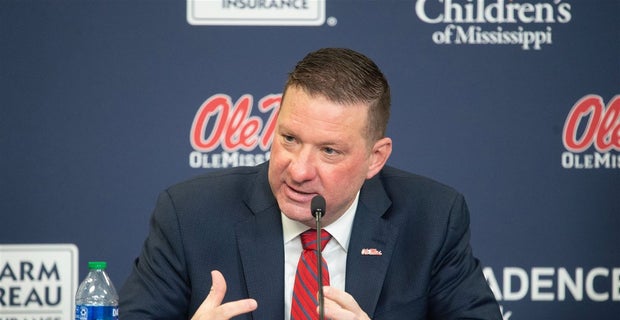
Brandon Murray, from Georgetown: Potential lead guard. If Murray gets a waiver to play right away (and he has a good case), he’ll be lined up for a significant role. Ole Miss has a lot of wings, but Murray will either start or play starter-like minutes off the bench. Murray likely won’t be asked to do as much shot creation as last year at Georgetown, but that might be a good thing for his efficiency numbers. But he can make boatloads of money on the defensive end under an ace defensive coach like Chris Beard.
Austin Nunez, from Arizona State: Potential starter. Nunez’s flashes last year at Arizona State were really tantalizing, but he was buried on the depth chart. Ole Miss has so many big, rangy wings who can help Nunez avoid being mercilessly targeted on defense. But there’s a real opportunity for Nunez to earn the starting point guard gig.
Moussa Cisse, from Oklahoma State: Starter. On paper, Cisse has a tough case for a waiver to play right away. We’ll see what the NCAA does. If he is eligible, Cisse is going to be the anchor of an Ole Miss defense that should be ridiculously nasty. Opponents only shot 52.7% at the rim last year against Oklahoma State when Cisse was on the floor, per hoop-explorer.
Jamarion Sharp, from Western Kentucky: TBD. Sharp is Cisse insurance. If Cisse can play right away, Sharp will still have a really big role. Ole Miss can still offer the 7-foot-5 shot-blocker at least 15 minutes per game at the 5, and the intimidating rim protection will not dip for 40 minutes. If Cisse has to sit out the entire season, Sharp’s job description changes significantly. His minutes likely climb to the 25-ish range.
Allen Flanigan, from Auburn: Backcourt rotation. Ole Miss has a lot of wings. Matthew Murrell, Jaemyn Brakefield, Murray and Flanigan should all be excellent defensive pieces from the start. Beard can get really creative with the rotations. Flanigan quietly shot 39.2% on catch-and-shoot three-pointers last season. If he can replicate that, he’ll have an easy path to well over 20 minutes a night.
Jaylen Murray, from St. Peter’s: Potential starter. Murray and Nunez seem destined to duke it out for the starting point guard spot. But Beard can use both of them throughout the season to ease the workload.
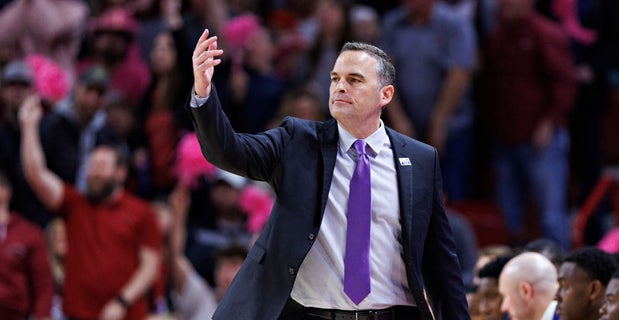
Jalen Cook, from Tulane: Lead guard. Starter. All of the above. Oh, except he needs a waiver to play right away. If the Tulane transfer is eligible right away, LSU’s upside in 2023-24 completely changes. Cook has every trick in the book. He’s not huge, but Cook is an extremely tough cover. Cook shot a ridiculous 50% on 96 runners last year, according to Synergy. That in-between game is what can separate Cook from the rest of the pack.
Will Baker, from Nevada: Potential starter. It’s fair to have some questions about how Baker will translate on the defensive end in the SEC. But Baker can make up for it on the offensive end. Baker was one of college basketball’s most-efficient post-up scorers last season, and he shot 35% from downtown. Baker should earn plenty of minutes for LSU’s wide-open frontcourt, but Matt McMahon might have to play two-big lineups to add a semblance of rim protection.
Jordan Wright, from Vanderbilt: Wing rotation. Wright’s defense can get him on the floor, but he has to knock down threes to stick. Wright did shoot 40% from three-point range in SEC play last season. A 5-for-26 start to the season really clouded his overall percentage. But Wright has been a reliable shooter for each of the past three seasons. Wright can provide some insurance if Mwani Wilkinson can’t knock off the rust quickly.
Carlos Stewart, from Santa Clara: High-level rotation player, potential starter. Stewart seems to have a much more projectable role if Cook has to sit out. The Santa Clara transfer shot 42% from three-point range and was impossible to stay in front of. His stop-start is tough to contain. Stewart can play alongside Cook, too, but LSU might need to be a bit more creative defensively if it has two guards under 6-foot-1 on the floor together.
Daimion Collins, from Kentucky: Collins projects to be the best shot-blocker on the roster. He’s still rail thin, but Collins is a violent leaper who can be a real piece that LSU tries to funnel opposing ball-handlers toward. What’s his role offensively? LSU likely won’t be handing him a bunch of post-up touches right away, but Collins would be a big winner if Cook can get the waiver. There’s real pick-and-roll synergy that could develop between those two. Collins can go up and get any pass around the square.
Hunter Dean, from George Washington: Frontcourt depth. LSU has multiple young pieces in its frontcourt that have had serious injuries in the past. Dean can cover up those gaps if the injuries flare up again. The 6-foot-10, 235-pound big man was productive for George Washington (8.7 points, 6.1 rebounds), but the offense didn’t really run through him much. Dean finished around the rim at at 69.3% clip. That’ll play.
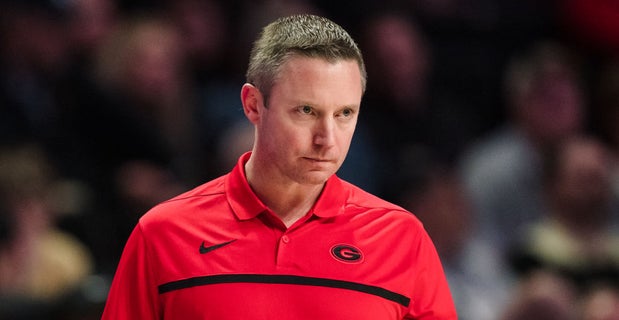
Jalen DeLoach, from VCU: Starter. DeLoach is going to find his way onto the floor in any format. The bouncy, VCU transfer is an elite defender. VCU only allowed 88.8 points per 100 possessions when DeLoach was on the floor last year. Opponents only shot 48.1% at the rim against VCU with DeLoach in the game, according to hoop-explorer. The 6-foot-9, 215-pound forward is an excellent shot-blocker who will protect the rim, rack up deflections and attack the glass at all times. Georgia’s frontcourt has a lot of pieces, but DeLoach is the best overall defender who uses that great motor to be in the right place at the right time on offense.
RJ Melendez, from Illinois: Wing rotation. Don’t be fooled by Melendez’s ugly 26% three-point shooting mark last season. The soon-to-be-junior wing had a shoulder injury and a devastating slump that tanked everything. A fresh start should help Melendez get back on track. He can be an impactful defender for Georgia – especially chasing around shooters – and the path to being a helpful Three-and-D weapon isn’t that far from materializing. Can he be anything more than that? TBD.
Noah Thomasson, from Niagara: Lead guard. Georgia invested so much time into getting Thomasson because it just doesn’t have a piece like him on the roster. Thomasson is the favorite to lead the Dawgs in scoring thanks to his polished, all-around offensive game. Thomasson was an efficient three-point sniper both off the catch (39.6%) and off the bounce (36.4%), and the 6-foot-3, 195-pound veteran used a nifty floater to finish inside the arc at a high clip. Georgia needs him to assimilate to the SEC speed quickly.
R.J. Sunahara, from Nova Southeastern: Wing rotation. Sunahara has the size and vertical pop to slide down to the 4 in some of Georgia’s small-ball lineups. He’s been a low-volume, high-percentage three-point shooter throughout his career, but he may have to ramp up the attempts to play the 3 in the SEC. Georgia’s wing rotation is wide open. There’s a starting spot up for grabs.
Russel Tchewa, from South Florida: Frontcourt rotation, potential starter. There’s an avenue for Tchewa to earn a spot in the starting lineup if the Georgia coaching staff opts to play DeLoach at the 4. Regardless, Tchewa will be in line to earn around 20 minutes per game thanks to his ability to generate offense on the block. Tchewa averaged over 0.9 points per possession on 136 post-ups last year at South Florida. The 7-foot, 280-pound big man has to prove he can defend in space against explosive SEC lead guards, and Georgia’s defensive scheme is likely only going to feature drop coverage against ball screens when Tchewa is in the game, but he can be a helpful frontcourt piece.
Jace Carter, from UIC: Role player. This backcourt belongs to Wade Taylor IV and Tyrese Radford until further notice. But there’s room for another guard to carve out a significant role. Carter’s efficiency numbers dipped as the featured piece for UIC. But as a true freshman, he shot 38.2% from three-point range as a supporting cast member. That’s the job description Texas A&M will likely need him to embrace if he wants to get on the floor.
Eli Lawrence, from Middle Tennessee: Role player. Texas A&M has to find big guards who can stick with the big wings in the SEC and knock down open catch-and-shoot jumpers. Lawrence will have every opportunity to earn that role. The 6-foot-5, 185-pound guard shot 34% from three-point range last year and has the competitiveness to bring the fire on the defensive end.
Wildens Leveque, from UMass: Frontcourt depth piece. Texas A&M played multiple bigs together often last year, but Leveque is likely behind both Julius Marble and Henry Coleman III. Andersson Garcia will also get minutes at the 4, too. So Leveque is likely the leader in the clubhouse to get the backup 5 duties.
Tramon Mark, from Houston: Potential starter. Mark’s defensive rules at Houston have a lot in common with what Arkansas wants from its wings. The 6-foot-5, 195-pound guard can guard four positions, and it isn’t hard to envision Mark developing into Arkansas’ stopper. How does that impact his offensive workload? We’ll see. But Mark is so slithery and he’s worked tirelessly to turn himself into a better shooter. Mark has to find a way to pay off those drives at the rim. Mark shot just 44.4% on layups last season. Mark has All-SEC upside at Arkansas.
Khalif Battle, from Temple: High-level role player. Battle can get buckets in a lot of different ways and he graded out well on the defensive end last year for Temple. Free throws have to be such a big piece of his diet at Arkansas. Battle is a phenomenal free throw shooter and has the size (6-foot-5, 185 pounds) to attack creases and draw plenty of fouls in Arkansas’ pro-like sets. Battle is not going to have the same volume at Arkansas that he had at Temple, so the talented guard has to find a way to strike that balance of hunting his buckets when he gets his chances without falling in love with the tough, off-the-bounce threes.
Jeremiah Davenport, from Cincinnati: Role player. A big-bodied forward who drilled 69 three-pointers in 35 games is exactly what Arkansas needed. Davenport can play multiple positions (the 3 and the 4 seem most likely), and could add the much-needed floor-spacing when Makhi Mitchell or Jalen Graham are at the 5. Davenport was a very good catch-and-shoot assassin last year, but he really struggled on off-the-bounce threes. Arkansas, likely, doesn’t need him to do much of his own shot creation. Davenport can help Arkansas a lot if he buys into doing the simple things well.
Keyon Menifield, from Washington: Arkansas announced Menifield is redshirting the 2023-24 season and will not play.
Chandler Lawson, from Memphis: Frontcourt rotation. Lawson has absurdly long arms that he smartly uses on the defensive end. Arkansas wants basically two of everything, and Lawson can step in at either the 4 or the 5 without the Hogs’ defense slipping a bit. He’s likely best-suited to loom in the dunker spot or fly through the lane as a screener and cutter. But Lawson is a phenomenal scheme fit for everything Arkansas wants to do. Secondary rim protection? Yep. Hard-hedging ball screens? Yep. Deflection machine? Yep. It’s a flawless marriage.
El Ellis, from Louisville: Potential starter. Ellis has to prove he’s more than just an empty-calorie guard who gets numbers but doesn’t truly contribute to winning. There’s a real battle for minutes in Arkansas’ backcourt. Menifield’s redshirt opens the door for Ellis to get a big brunt of Arkansas’ point guard duties. Ellis averaged a respectable 0.842 points per possession in 222 ball screens last year. Eric Musselman is betting on Ellis benefiting from a better supporting cast and coming alive in Arkansas’ winning environment. But Ellis will have to accept a lower usage rate.
Tre Mitchell, from West Virginia: Starter. Even when Aaron Bradshaw and Ugonna Onyenso get healthy, Mitchell is going to be a big piece of this Kentucky offense. The three-point stroke and passing/shot-creation have to be consistently excellent to make up for some defensive issues, but Mitchell is shaping up to be a massive late (miracle) addition for John Calipari and the Kentucky staff.
Aaron Estrada, from Hofstra: Starter. Alabama has a lot of really good guards to cycle through, but Estrada didn’t come to Bama to sit on the bench. Estrada is going to have the ball in his hands a lot and be a massive piece of the program. Is he the go-to guard or is it Mark Sears? It doesn’t matter. Both are really good.
Latrell Wrightsell Jr., from Cal State Fullerton: High-level rotation player. Wrightsell shot over 40% on catch-and-shoot three-pointers last season while also grading out really well in ball-screen efficiency. If that translates to the SEC, Wrightsell will be on the floor. There’s more than enough minutes for Estrada, Sears, Wrightsell and Rylan Griffen in Alabama’s backcourt now that Jahvon Quinerly bounced for Memphis.
Grant Nelson, from North Dakota State: Starter. Nelson projects to be the starting power forward. How he’s utilized is more interesting than the raw number of minutes he actually earns. Is Nelson a low-usage offensive piece who is more of a connector and playmaker? Or will Alabama put the ball in his hands and let him make plays (and mistakes)? Maybe a mixture of both?
Mohamed Wague, from West Virginia: Rotation piece. Alabama swooping in to steal Wague could loom very large. Alabama likely desperately wants to avoid playing Nelson alone at the 5. Wague offers much-needed resistance around the rim and a legitimate lob threat. He’ll compete with Nick Pringle for minutes at the 5.
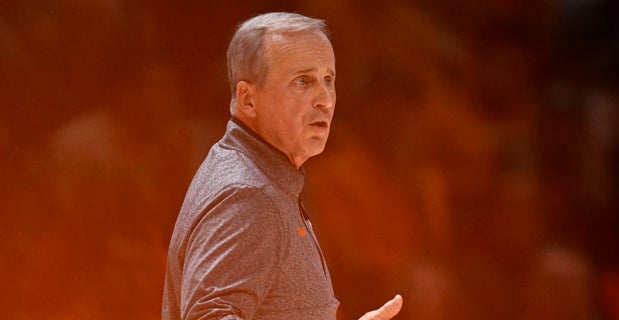
Dalton Knecht, from Northern Colorado: High-level rotation player, potential lead guard. Knecht has the polished offensive arsenal Tennessee desperately needed, and the Vols can surround him with four really good defenders to eliminate some of his shortcomings on that end. Knecht still has to earn it, but there’s every opportunity for him to be a high-usage weapon for Tennessee’s backcourt.
Jordan Gainey, from USC Upstate: Backcourt depth piece. Gainey can certainly shoot it, but the fight for minutes in Tennessee’s backcourt is tough. Santiago Vescovi, Jahmai Mashack and Knecht are all going to get their minutes. When healthy, Zakai Zeigler is going to be on the floor. Gainey is a fantastic depth piece to keep the floor high if an all-too-familiar injury comes along, but when healthy, Tennessee doesn’t have free minutes to spare in the backcourt.
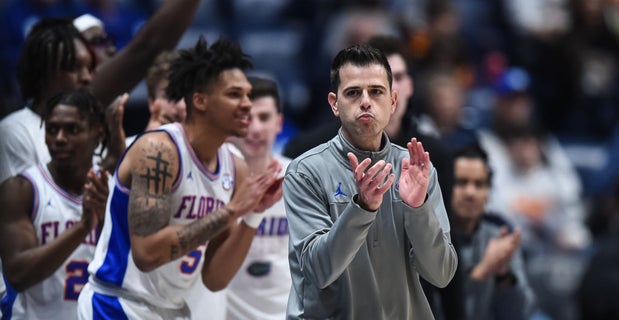
EJ Jarvis, from Yale: Frontcourt depth. If Jarvis is your third-best frontcourt weapon, you’re in good shape. There are more than enough minutes to go around for Jarvis behind Tyrese Samuel and Micah Handlogten. The 6-foot-8, 220-pound veteran should help keep Florida’s interior defense quite stout.
Walter Clayton Jr., from Iona: Starter. Potential lead guard. Florida has four guards who will likely all play significant minutes. Clayton is one of them. The dynamic Iona transfer has SEC athleticism and got schooled by Rick Pitino. He’s ready to be an electric guard at any level. Clayton shot an absurd 49% on catch-and-shoot threes last year, but he’s really comfortable operating in ball screens. Todd Golden is going to have some fun utilizing Clayton in creative ways.
Micah Handlogten, from Marshall: Potential starter. On paper, Florida has six starters for five spots. That’s a good thing. If Golden opts for his “defense first” lineup, Handlogten will slide into the starting lineup alongside Samuel. But there’s offensive upside with the Marshall transfer, too. He should take another step forward as a comfortable pick-and-pop partner, but Handlogten is an exceptional roller who should be even more physically imposing after another year in a college strength and conditioning program. The 7-footer has the traits to be really, really good one day.
Tyrese Samuel, from Seton Hall: Potential starter. Samuel is just good at basketball. Florida needed more high-floor, reliable weapons. Samuel can guard both 4s and 5s without a problem. He’ll give Florida’s offense a huge boost with his knack for ripping away offensive rebounds. Samuel playing around 24 minutes per game feels like the floor with plenty of room to grow.
Zyon Pullin, from UC Riverside: Starter. Potential lead guard. Pullin is a little different than the rest of Florida’s guards because of his size (6-foot-4, 195 pounds) and the number of ball-screen reps he has under his belt (three straight years with at least 150 ball-screens at UC Riverside). Pullin is the closest version to a true point guard on Florida’s roster, but that scoring gene won’t disappear. Pullin’s ability to get into the paint plays, especially if the Gators can complement him with snipers like Will Richard, Clayton and Riley Kugel.
Julian Rishwain, from San Francisco: Backcourt depth. Rishwain has to get healthy, but he shot 43.9% from three-point range for a San Francisco team that made the NCAA Tournament in 2021-22. The 6-foot-5 guard adds experience (105 career games) and a true knockdown stroke. At minimum, the floor-spacing Rishwain provides will help Florida’s second-unit lineups.
